
Internships are often promoted as a practical way for students to gain experience while earning a degree, but their real value can feel unclear amid the balancing act of coursework, work and personal commitments. For many students and adult learners, deciding whether to pursue an internship comes down to how much it actually supports career readiness and early job outcomes. To explore this question, a questionnaire conducted on behalf of Eastern Washington University (EWU) surveyed 1,000 recent college graduates about their internship experiences during college.
This research aimed to explore how internships relate to graduates’ confidence, skill development and early career outcomes after graduation. The findings offer students and prospective learners a clearer view of what internships can lead to once they enter the workforce and begin building their careers.
Key Takeaways
- 70% of graduates completed at least one internship during their degree program, including paid, unpaid or mixed internship experiences.
- About one in five graduates (21%) accepted a full-time offer from their internship host, while another 13% landed a full-time role elsewhere through referrals or connections made during their internship.
- Graduates who completed an internship, co-op or practicum were more than twice as likely as those with no internship or only an apprenticeship to land a starting salary of $80K+ (14% vs. 5%, respectively).
- Among graduates who completed three internships, 28% earned a starting salary of $80K+, compared with those who completed two internships (13%) or one (10%).
- More than one in three interns (35%) saw their project or idea continue after their internship ended.
- 76% of former interns left their internships feeling confident in their career readiness.
Internship Participation Was Common and Linked to Early Outcomes
Internships can serve different purposes depending on a student’s goals, schedule and field of study. For many online learners, these opportunities can also act as a structured way to connect classroom learning to workplace expectations.
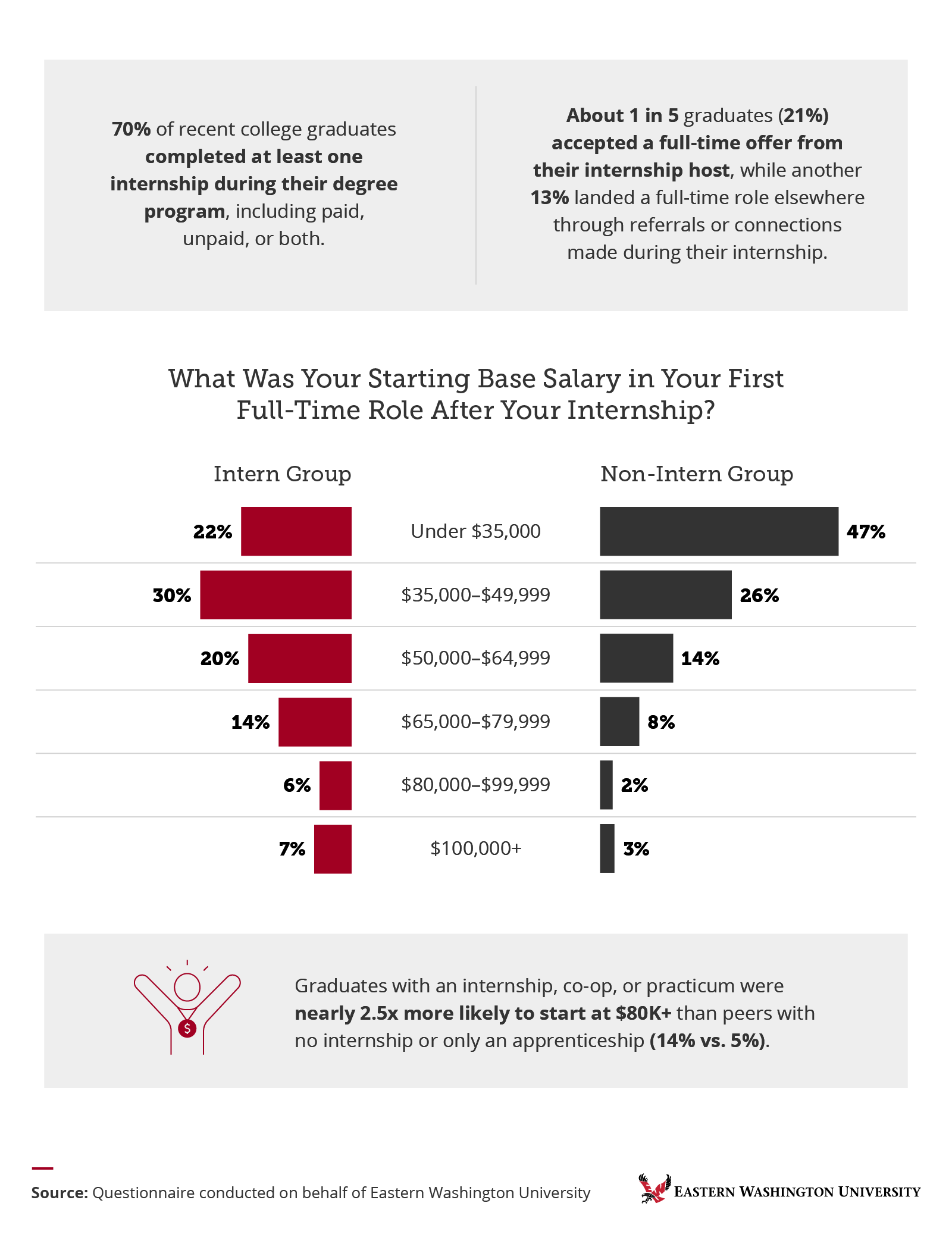
Seven in 10 graduates completed at least one internship during their degree program, including paid, unpaid or mixed experiences. Within the intern group, nearly half (47%) completed one internship, while 35% completed two. Smaller shares completed three (10%) or four or more internships (7%).
Those who completed internships varied by education level, as follows:
- Undergraduate programs: 77%
- Non-MBA graduation programs: 17%
- MBA programs: 10%
These patterns help clarify how common internships are across different academic paths.
Internships also support direct pathways into employment. About one in five graduates (21%) accepted a full-time offer from their internship host, and another 13% secured a full-time role at another employer through referrals or connections made during their internship. When graduates secured full-time roles after internships:
- At or before graduation: 24%
- 0-3 months after graduation: 26%
- 4-6 months after graduation: 20%
- 7-12 months after graduation: 9%
- More than 12 months after graduation: 14%
Salary differences were also clear. Graduates who completed an internship, co-op or practicum (14%) were more than twice as likely to report a starting salary of $80,000+ compared with those who had no internship experience or only an apprenticeship (5%). Among graduates who completed three internships, 28% earned a starting salary of $80,000+, compared to those who completed one (10%) or two (13%) internships.
Confidence Grew Through Skills, Feedback and Mentorship
Career confidence often develops through repeated practice, clear expectations and support from experienced professionals. Internships can create structured opportunities to build those habits while still in school.
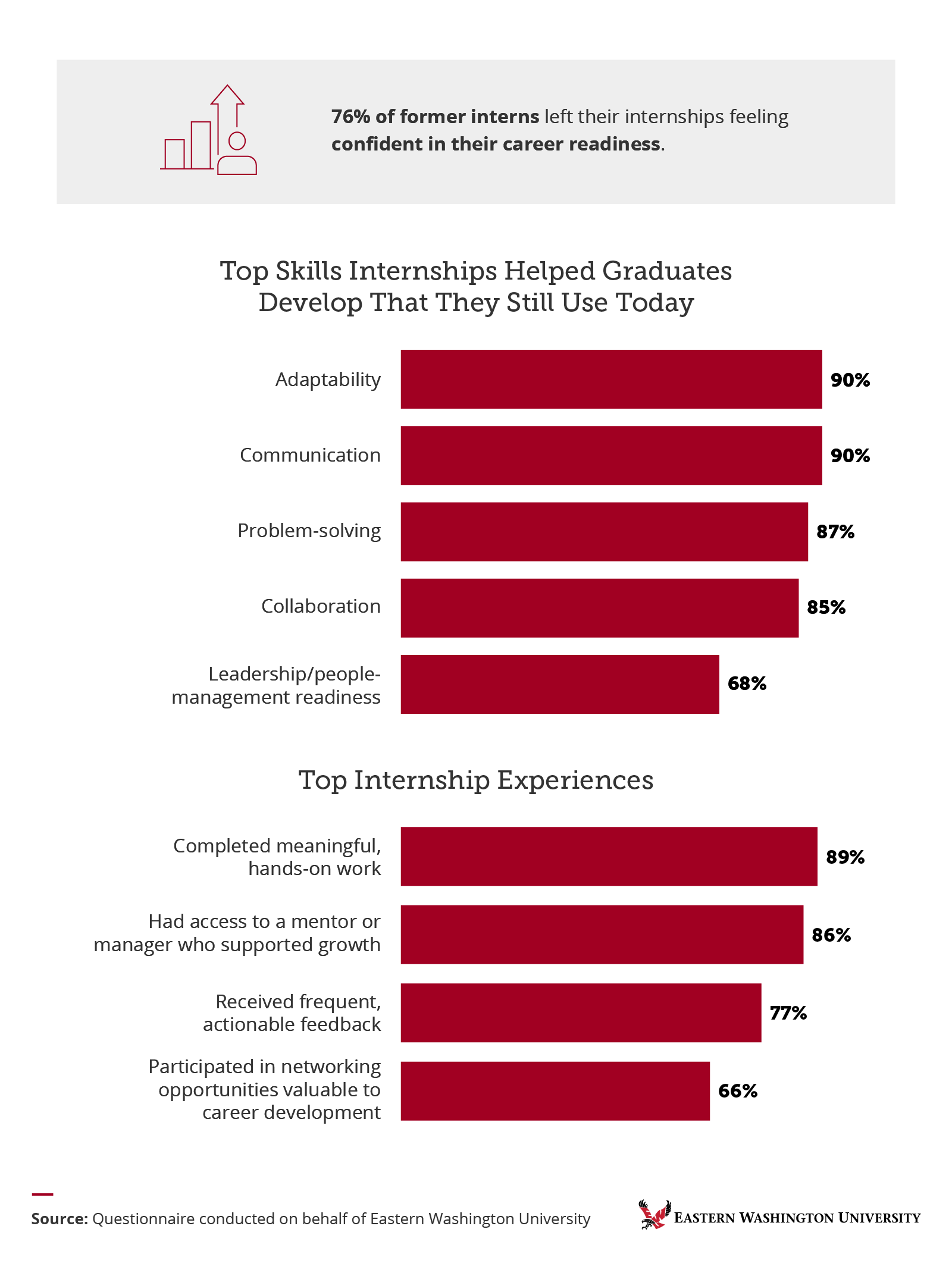
Many former interns reported building workplace skills that translate across roles, including adaptability (90%) and communication (90%). Other commonly reported skills included problem-solving (87%), collaboration (85%) and leadership or people-management readiness (68%).
More than one in three former interns (35%) had their project or idea continued after their internship ended. One-third said their work was presented to senior leaders, and 14% reported starting their careers in more senior roles than is typical for entry-level hires.
A majority (76%) said they left their internships feeling confident in their career readiness. When these graduates were grouped by industries, the most confident graduates were in:
- Professional and business services
- Manufacturing and industrial
- Retail and consumer services
- Finance
- Tech
Several aspects of internship design appeared to support this confidence. Many respondents said they:
- Were given responsibility for meaningful hands-on work (89%)
- Had access to a mentor or manager who supported their growth (86%)
- Received frequent, actionable feedback (77%)
Another 66% said networking opportunities during the internship were valuable to their career development.
Internships as a Bridge to Career Success
Internships played a meaningful role in how graduates described their confidence, skill development and early career outcomes. Many respondents connected internship experience to higher starting salaries, faster transitions into full-time work and opportunities shaped by professional connections.
Graduates also reported that mentorship, feedback and meaningful responsibilities supported their sense of job readiness. For online learners who want practical experience alongside a degree, structured internship opportunities can help translate academic progress into career momentum.
Methodology
A questionnaire was administered to 1,000 recent college graduates on behalf of Eastern Washington University to explore how internships help them bridge the gap between classroom learning and professional leadership. Respondents were sourced using CloudResearch Connect. The average age of respondents was 33; 50% were women, 49% were men, and 1% were non-binary. This is a non-scientific, exploratory questionnaire. It is not intended to represent all college graduates.
About Eastern Washington University
Eastern Washington University offers online learning options for working adults seeking flexible pathways to career growth. Through EWU’s online degree programs, students can build practical skills that align with real workplace expectations and long-term professional goals.
Fair Use Statement
The information in this article may be used for noncommercial purposes only. If you share or reference these findings, please include proper attribution with a link back to Eastern Washington University.