
The College of Education at Eastern Washington University (EWU) focuses on preparing teachers to support learners in all kinds of classrooms. With EWU’s fully online Master of Education (M.Ed.) – Special Education program, you can build specialized skills while you work, and you’ll be stepping into a field where the demand for well-trained special educators keeps growing.
A master’s in special education helps you feel more confident leading inclusive classrooms and using interventions backed by real research. It can also help you qualify for advanced licensure or take on leadership roles down the line. On a practical level, it can open doors to career growth and financial aid options, so you can move forward professionally without putting everything else on pause.
In this article, we’ll explore the top jobs for educators with this graduate degree, salary insights, licensure considerations and how the online format supports flexibility for full-time teachers. Whether you’re seeking to expand your impact in the classroom or move into district-level leadership, Eastern Washington University’s program is designed to support your next step. Advance your career while supporting students with special needs, all on your own schedule.
Why Earn a Master’s in Special Education?
A master’s in special education equips teachers with advanced training in inclusion practices, behavioral strategies and differentiated instruction. This helps educators take on leadership roles, including becoming a board-certified behavior analyst or coordinating services at the school or district level.
Eastern Washington University’s degree program addresses this workforce gap by providing an accessible path to licensure and specialization. Graduates gain tools to elevate classroom experiences, improve student outcomes, and achieve long-term job security and earning potential, all while aligning with the standards set by the Department of Education.
Top Career Paths with a Master’s in Special Education
A master’s in special education can open doors that go well beyond having your own classroom. It can prepare you for a range of roles in teaching, administration and behavioral support, depending on what direction you want to take your career. Across all of those paths, the goal is the same: helping more students get the support they need in truly inclusive learning environments.
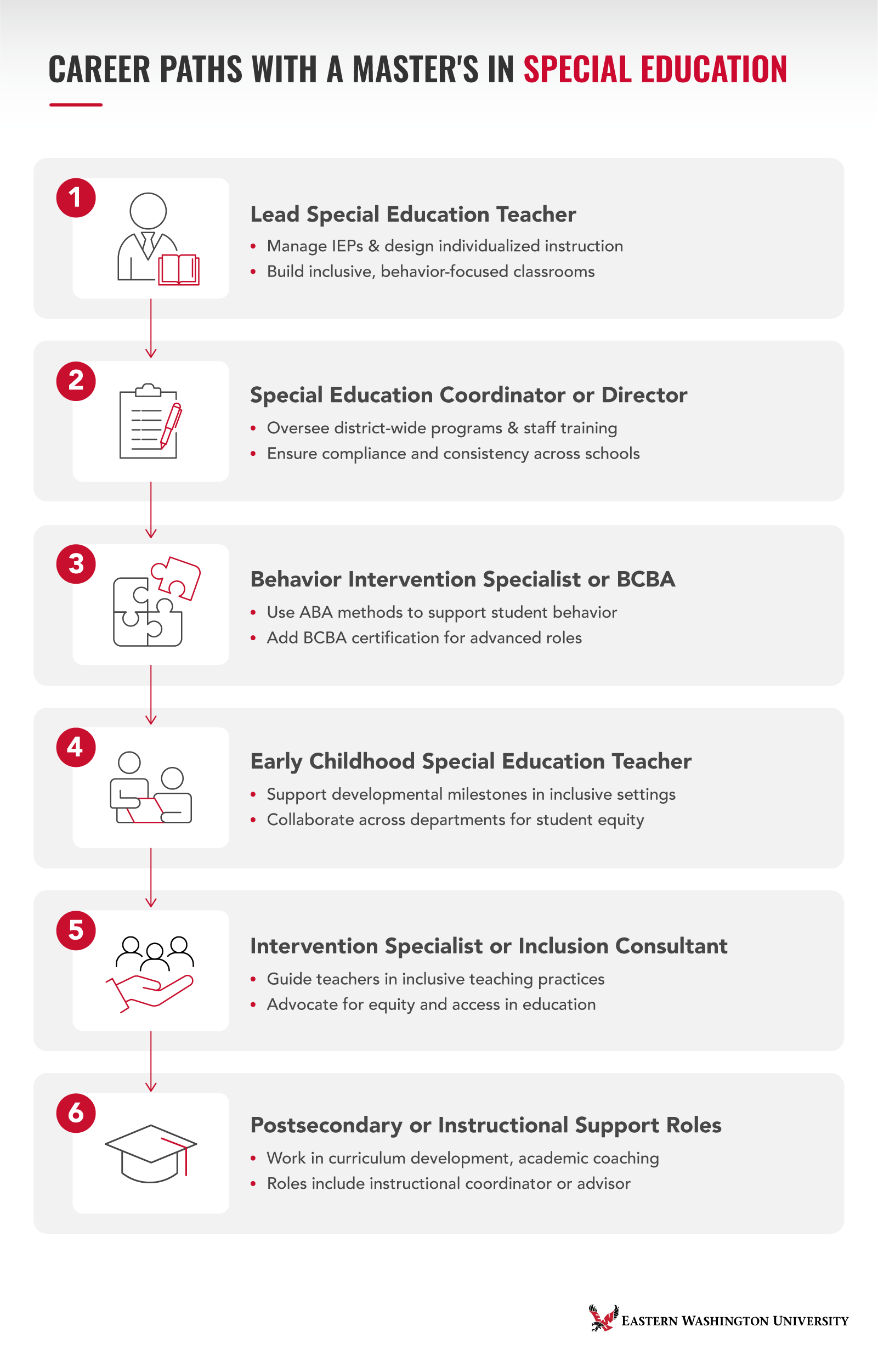
1. Lead Special Education Teacher
With a master’s, you’re better prepared to lead a special education classroom that supports students with more complex learning needs. You’ll be more comfortable designing individualized instruction, managing individualized education programs (IEPs) and working closely with families, related service providers and other specialists.
You’ll also spend time building practical skills around behavioral interventions and IEP development, so you can create a classroom environment that’s responsive and truly inclusive. And if you’re working toward a teaching license, an endorsement or a step up in responsibility, a graduate degree can strengthen your qualifications and help you lead with more confidence.
2. Special Education Coordinator or Director
In a coordinator or director role, you’re looking at special education from a district-wide perspective rather than a single classroom. You may oversee compliance, support staff training and help shape program development so services stay consistent across multiple schools.
These roles often require an added endorsement or specific licensure, and a special education graduate program like Eastern Washington University’s can help you meet those requirements. You also need strong leadership skills and a solid grasp of how special education services work across different school settings.
3. Behavior Intervention Specialist or BCBA
Behavior intervention specialists help students navigate challenging behaviors using evidence-based approaches, many of which come from applied behavior analysis (ABA). Some go on to earn additional credentials, like becoming a board-certified behavior analyst (BCBA), to expand their skills and strengthen their impact.
EWU’s curriculum covers behavioral intervention techniques you can use right away when working with students with autism spectrum disorders and other complex needs. If you want an extra boost on the credential side, some professionals also add a graduate certificate in ABA to enhance their qualifications.
4. Early Childhood Special Education Teacher
These professionals often collaborate across departments to strengthen inclusive practices in both public and private schools. They also help educators adapt instruction and speak up for equity in student services.
The program at EWU prepares educators to understand developmental milestones, learning disabilities and family-centered care in inclusive education settings. This role is ideal for those passionate about early childhood education and supporting children with special needs from the start.
5. Intervention Specialist or Inclusion Consultant
These professionals work across departments to promote inclusive practices in both public and private schools. They support educators in modifying instruction and advocating for equity in student services.
With a focus on collaboration, this role requires a strong foundation in teacher education and understanding of effective supports within a special education program. EWU’s degree program helps educators become agents of change as inclusion consultants or specialists, bridging gaps in access and opportunity.
6. Postsecondary or Instructional Support Roles
Graduates may also move into positions in instructional support, academic coaching or curriculum development. This is especially relevant in higher education or district-level leadership roles, where programs prepare graduates for these transitions through a focus on online learning, inclusive curriculum design and leadership development. Responsibilities like academic advising or instructional coordination can be a rewarding way to keep influencing education at scale, especially through professional development and mentorship.
Salary Outlook for Special Education Professionals
Educators with a graduate degree, such as a master’s in special education, often have higher salary potential than those who hold only a bachelor’s degree, especially in districts that offer stipends for advanced credentials and teacher certification enhancements. In many cases, full-time teachers with a master’s can qualify for salary increases or longevity stipends in addition to base pay. Even some part-time teachers who are pursuing professional development can benefit, as expanded qualifications can open doors to better pay and more opportunities.
According to the U.S. Bureau of Labor Statistics (BLS), the median annual wage for special education teachers nationwide was about $64,270 in May 2024. Salary can vary further depending on grade or level:
- Special education teachers at the secondary level earn mean salaries of $74,670 annually.
- Middle school teachers in special education have mean earnings of $73,630.
- Elementary and kindergarten special education teachers have mean salaries of $71,770.
These figures suggest that specialization and continued credentials can align with competitive pay across education settings. Compensation still varies widely by state and district, but advanced degrees remain a practical path toward long-term earnings growth and broader professional goals.
What to Expect From Eastern Washington University’s Online M.Ed.
Eastern Washington University’s online master’s program in special education is designed for working educators managing full-time jobs, classroom duties and ongoing growth. Here’s what you can expect from the online Master of Education experience:
- Flexible online learning: Complete coursework on your schedule through accessible online learning
- Training across education settings: Develop practical skills relevant to varied education settings
- Coursework in special education: Tackle in-depth coursework covering behavior management, inclusion and intervention strategies
- IEP instruction: Gain hands-on knowledge in IEP development and implementation
- Focus on evidence-based strategies: Apply evidence-based methods to real classroom challenges
- Structured practicum experiences: Participate in guided practicum work that connects theory to practice
To be admitted, you’ll need a bachelor’s degree, a minimum GPA of 3.0 and a valid teaching certificate. You’ll also submit official transcripts as part of the application process.
Student Success and Career Advancement
Graduates of Eastern Washington University’s graduate program in special education often move into leadership roles, serving as advocates and change agents in their schools and districts. Their paths highlight how the program supports student success while also helping educators pursue professional goals that expand beyond traditional teaching roles.
By earning a master’s degree, educators can strengthen their classroom impact and set themselves up for broader career advancement. With a strong focus on real-world application, the program is a solid fit for professionals who want to drive positive outcomes for students with diverse needs.
Take the Next Step Toward Your Career in Special Education
A master’s program in special education can provide advanced credentials while also opening doors to meaningful impact, stronger earning potential and leadership opportunities across education settings. Eastern Washington University’s online master’s degree in special education is designed for working teachers who want flexibility without sacrificing quality.
With asynchronous courses, supportive faculty and a practical curriculum, EWU helps educators align their careers with evolving workforce demands. The application process is straightforward, and enrollment options are available year-round. Competitive tuition rates and financial aid opportunities make it easier to invest in your future while continuing to serve students. Advance your impact in special education with Eastern Washington University’s online M.Ed. in Special Education program today.
FAQ
Below are answers to common questions about earning a master’s in special education. Whether you’re curious about timelines, salary expectations or licensure requirements, these quick insights can help guide your next steps.
Is it worth getting a master’s in special education?
Yes. A graduate degree in special education enhances your ability to lead inclusive classrooms, influence programs and pursue specialized roles. It also increases your earning potential and supports long-term professional growth in both teaching and special education leadership.
Do special education teachers need a master’s?
Requirements vary by state, but many school systems require a master’s degree for certain roles or promotions. In addition to meeting licensure requirements, an advanced degree program helps deepen your expertise and effectiveness in the classroom. Programs like EWU’s also support teacher certification and professional development goals.
Where do special education teachers make the most money?
According to BLS data, the highest-paying states for special education include New York, California and Oregon. Top-paying districts often align salary scales with advanced credentials, such as a graduate certificate or master’s degree. Additional credentials and access to financial aid can help both full-time and part-time teachers boost their earnings.
How long does it take to complete a master’s degree in special education?
Most programs take 12 to 24 months to complete for full-time students, while part-time learners may take longer. Eastern Washington University’s online learning structure offers flexible pacing, allowing students to earn required credit hours at a manageable pace through a fully online master’s program.